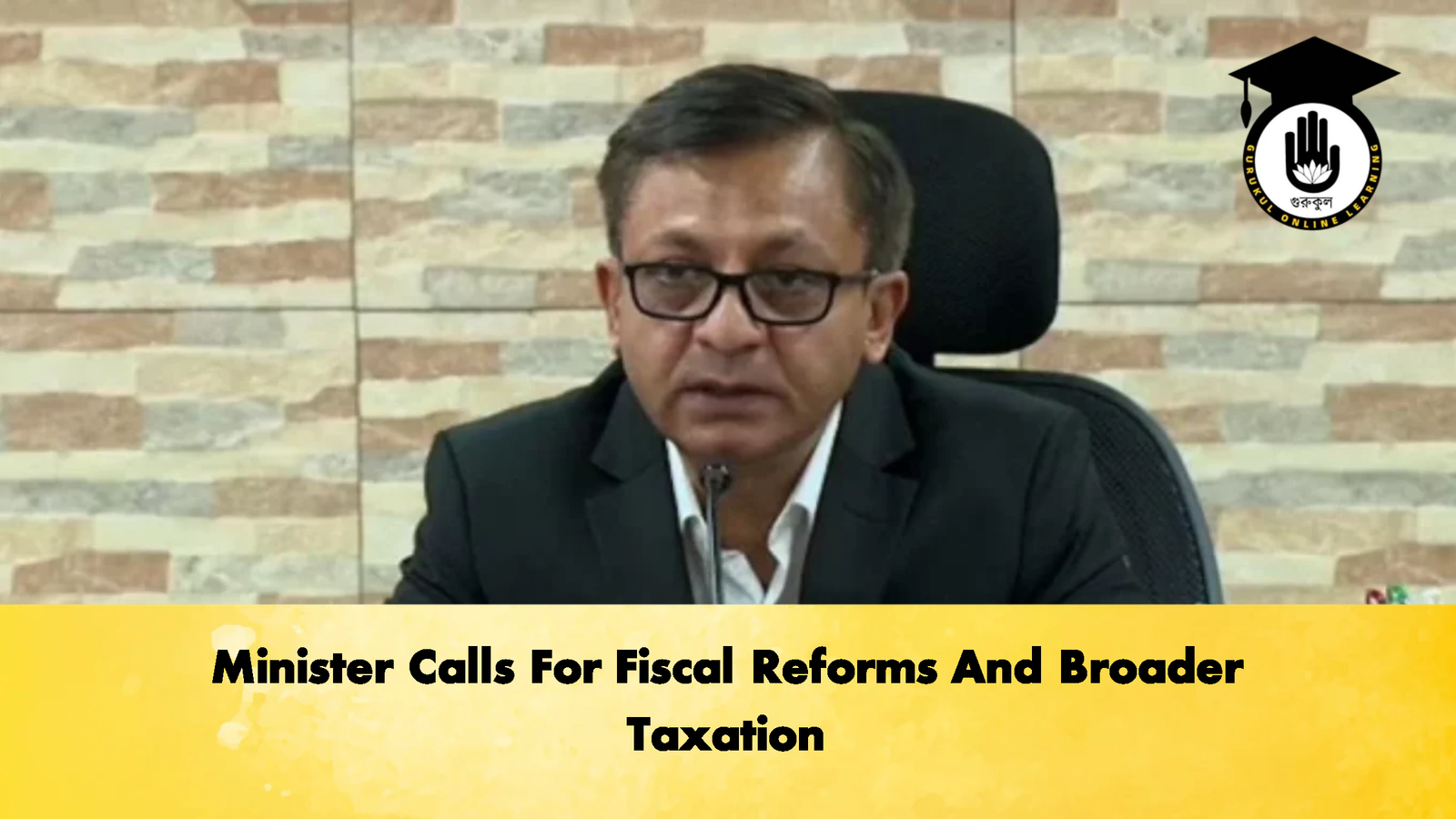
Amid growing economic pressures and evolving fiscal challenges, Bangladesh’s Commerce Minister has urged decisive action to strengthen debt management and expand the national tax base, warning that these reforms are essential for sustaining economic stability and long-term development.
Delivering remarks at the closing session of the National Multistakeholder Consultation on Bangladesh Graduation Readiness Assessment, held at the NEC Conference Hall of the Planning Commission on Sunday (5 April), Khandker Abdul Muqtadir emphasised the need for disciplined financial governance in the current economic climate.
He observed that Bangladesh is navigating a complex economic landscape marked by both domestic constraints and global uncertainties. In such a scenario, he stressed that carefully calibrated policies and strategic planning are indispensable to maintaining macroeconomic balance and avoiding fiscal vulnerabilities.
A key issue highlighted by the minister was the rising burden of public debt. He noted that, in previous years, several large-scale development projects were undertaken without sufficient preparation or rigorous feasibility analysis. As a result, cost overruns, delays, and inefficiencies in project execution have contributed to mounting financial strain on the economy.
“While managing existing debt effectively must remain a top priority, we must also exercise far greater caution in approving new projects,” he stated. He further underscored that future investments should be grounded in realistic assessments, aligned with national priorities, and capable of delivering tangible economic benefits.
Key Economic Concerns Highlighted
| Issue Area | Current Challenge | Recommended Action |
|---|---|---|
| Public Debt | Rising due to inadequately prepared large projects | Strengthen oversight and debt management systems |
| Project Implementation | Delays, inefficiencies, and cost escalation | Enhance feasibility studies and accountability |
| Revenue Collection | Persistently low tax-to-GDP ratio | Broaden tax base rather than raise tax rates |
| Informal Economy | Significant activity outside formal taxation framework | Integrate more individuals and enterprises into tax |
Turning to revenue mobilisation, the minister pointed out that Bangladesh’s tax-to-GDP ratio remains below desired levels compared to regional and international standards. Rather than imposing higher tax rates, he advocated expanding the tax net to include a wider segment of the population and business community.
He noted that a substantial portion of economic activity still operates outside formal taxation channels, thereby limiting the government’s capacity to mobilise domestic resources. Bringing these untapped sectors into the tax framework, he argued, would significantly enhance revenue collection while ensuring a more equitable distribution of the tax burden.
“Strengthening domestic resource mobilisation is crucial not only for improving our ability to service debt but also for sustaining development initiatives in a consistent and resilient manner,” he added.
The session was chaired by Md Shahriar Kader Siddiky, Secretary of the Economic Relations Division. Among the notable participants were Rabab Fatima and Planning State Minister Junaid Ahmed Palak, alongside policymakers, development partners, and experts from various sectors.
Participants collectively acknowledged that Bangladesh’s transition from a Least Developed Country (LDC) to a developing nation presents both opportunities and challenges. Strengthening institutional capacity, improving fiscal discipline, and enhancing coordination among stakeholders were identified as critical priorities for ensuring a smooth and sustainable transition.
Experts at the seminar also pointed to broader global factors, including economic volatility, exchange rate fluctuations, and external debt servicing obligations, as additional pressures on the country’s financial system. Without comprehensive reforms in debt management and revenue generation, they cautioned, maintaining stable economic growth could become increasingly difficult.
In conclusion, the minister’s remarks underscore the urgency of structural reforms in Bangladesh’s fiscal framework. Strengthened debt oversight, improved transparency in public expenditure, and a broader, more inclusive tax system are likely to be pivotal in shaping a resilient and sustainable economic future for the nation.