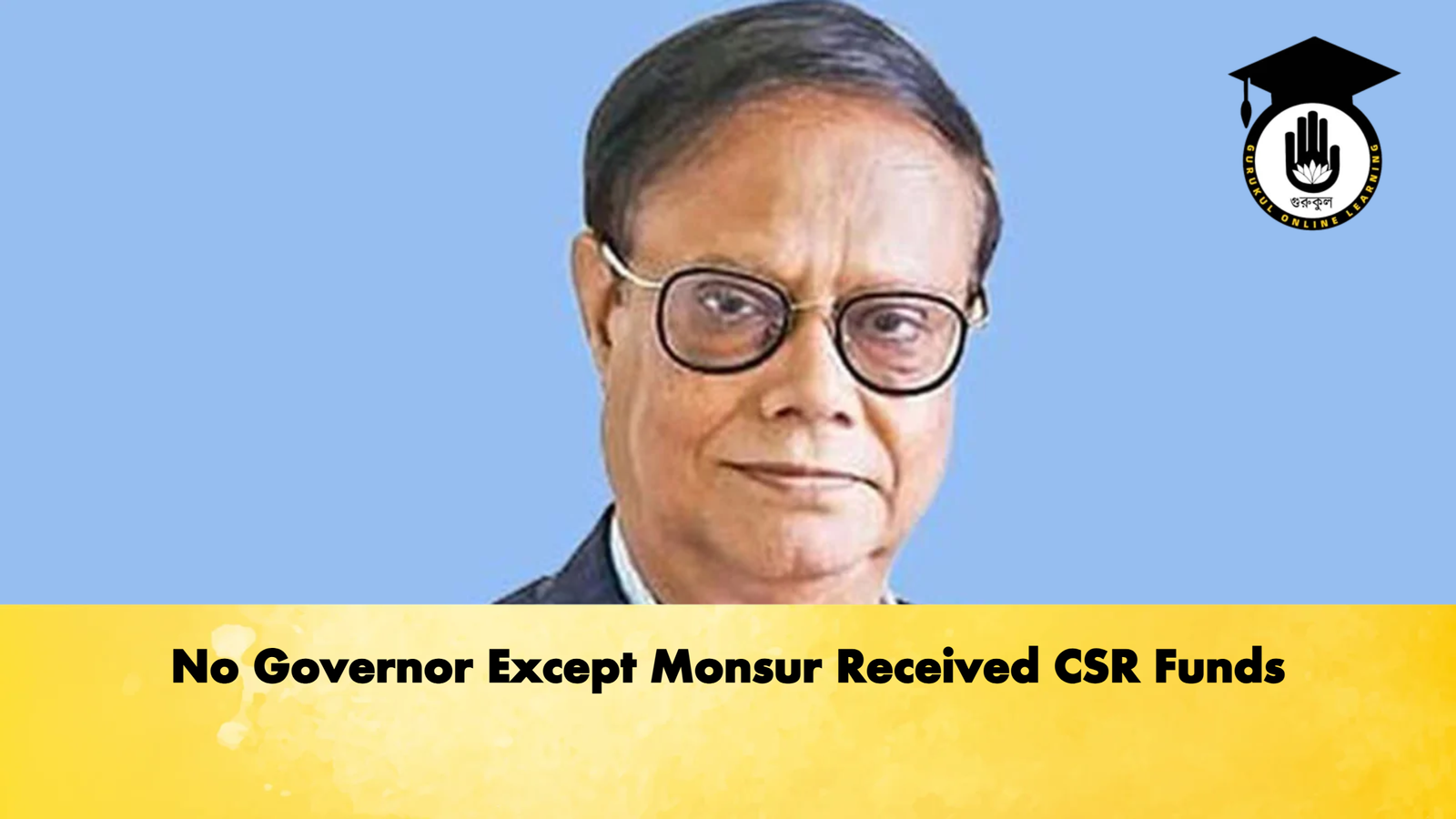
Bangladesh Bank, the nation’s central bank, has seen a total of twelve governors serve between 18 January 1972 and 25 February 2026. Among them, Dr Ahsan H. Monsur holds the distinction of serving the shortest tenure, lasting only 1 year, 6 months, and 17 days. Despite his brief term, Monsur’s tenure became the centre of intense scrutiny due to several controversial decisions, particularly regarding the allocation of the bank’s Corporate Social Responsibility (CSR) funds.
Monsur was removed from office two and a half years before his scheduled term ended. Several senior officials within Bangladesh Bank have raised questions about his handling of CSR disbursements, suggesting that some allocations may have reflected personal affiliations rather than institutional priorities.
Historically, CSR funds at Bangladesh Bank have been directed toward education, healthcare, and social development initiatives, with a focus on private and MPO-affiliated educational institutions. Projects such as computer lab installations and health support programmes have been standard recipients. However, under Monsur, allegations emerged that funds were directed to institutions with which he had personal or professional connections.
Official records and internal sources indicate the following key allocations during Monsur’s tenure:
| Institution / Project | Amount Allocated (BDT) | Purpose | Controversy |
|---|---|---|---|
| Khalil-Malik Foundation, Chuadanga | 29.7 million | Support for cancer and kidney patients | Alleged close personal connection; insufficient time for capacity assessment |
| Chuadanga High School Computer Lab | 2.5 million | Educational infrastructure | Governor personally attended the inauguration with spouse |
| Martha Lindstrom Nurjahan Begum Girls’ School, Tangail | 2.5 million | Educational development | Governor served as board president; potential conflict of interest |
| Nilphamari Government High School | Not disclosed | Educational support | Governor’s alma mater; reported pressure on department for approval |
Officials report that governors rarely engage directly in CSR project decisions, making Monsur’s personal involvement highly unusual. In Tangail, concerns were raised not only regarding fund allocation but also student safety. The school in question is adjacent to Monsur’s privately-owned Water Garden Resort & Spa. A local administrative investigation in August 2022 required the removal of a resort gate to ensure student security. Subsequently, Monsur assumed the school board presidency and authorised CSR funding, raising new questions about propriety.
Moreover, while CSR funding has traditionally favoured private and MPO-registered institutions, the decision to allocate funds to Nilphamari Government High School was an exceptional deviation, allegedly influenced by Monsur’s personal ties to the school.
Several unnamed Bangladesh Bank officials emphasise that no other governor in the bank’s history has faced allegations of directing CSR funds toward personally affiliated institutions. Experts note that such actions, if true, constitute a direct conflict of interest and undermine transparency and accountability in managing the central bank’s critical social funding programme.
Monsur’s tenure has thus become a cautionary tale in governance, highlighting the importance of institutional checks, impartiality, and ethical management of public resources.