The state-owned Rupali Bank has repaid $283 million in two instalments for a foreign loan taken by SS Power Limited without obtaining approval from the Bangladesh Bank. The central bank has stated that this action violates the terms of the loan agreement. A senior official of the Bangladesh Bank confirmed to the media that a letter has been sent to Rupali Bank seeking an explanation for this irregularity.
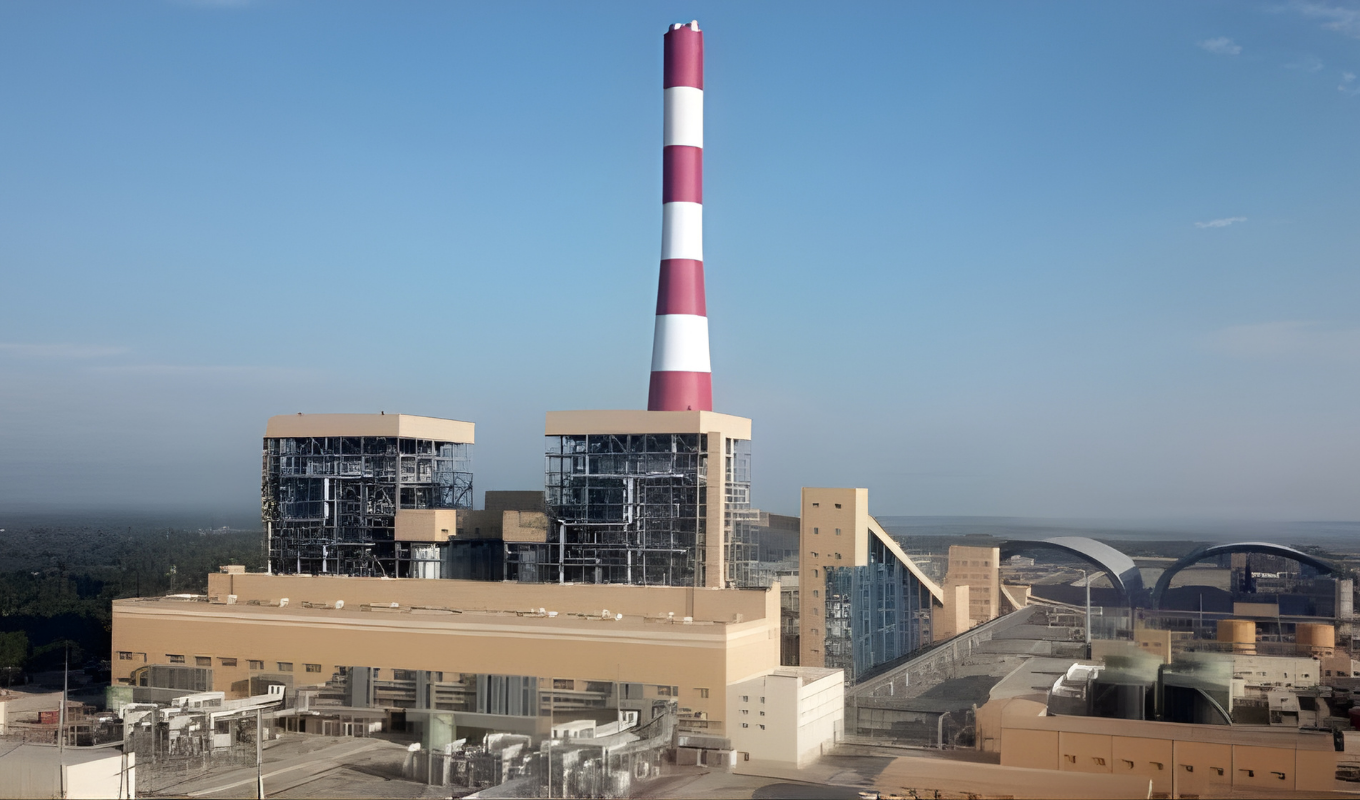
The power plant in question is located along the Bay of Bengal in Banshkhali, Chattogram, and is jointly owned by S Alam Group and China’s SEPCO III. Mohammad Saiful Alam Masud, the Chairman of S Alam Group, serves as the managing director of the plant.
In its letter, the Bangladesh Bank noted that Rupali Bank remitted the third loan instalment of $140 million on 19 December 2024 and the fourth instalment of $143 million on 23 June 2025 to the Singapore branch of the Bank of China without regulatory approval. The first two instalments, totalling $243.76 million, were paid with the central bank’s permission. The first payment was automatic under the agreement, while the second was settled by Islami Bank with permission on 20 June 2024.
According to data from the Bangladesh Bank, a total loan of $1,697 million was secured from the Bank of China for the plant’s construction and operations until 2035. To date, $575 million comprising principal and interest has been repaid. The project was jointly launched in 2016 by former Prime Minister Sheikh Hasina and Chinese President Xi Jinping following an agreement between the Bangladesh Power Development Board (BPDB) and SS Power.
A senior official from the Bangladesh Bank stated that Rupali Bank must seek approval for the fifth instalment, which will be granted upon submission of the application. Meanwhile, a senior official from Rupali Bank explained to the media that the funds for the third and fourth instalments were sent to the correct account, but approval was not sought due to a technical issue rather than any intentional oversight. He added that they are treating the central bank’s letter seriously and will ensure approval is obtained before the next payment.
The official explained that fund transfers usually go through multiple stages, including a foreign currency (FC) account where funds can be credited but not debited. Consequently, the transaction was executed directly, bypassing the FC account. He also noted that SS Power financed all dollar purchases for these payments. The Bangladesh Bank has not issued a formal public statement on the matter.
When approached by the media, Rupali Bank Managing Director Kazi Md Wahidul Islam declined to provide specific details, suggesting clarification be sought from the local office. Later, the bank’s communication department issued a written statement.
The bank’s statement clarified that loan instalments approved by the Bangladesh Investment Development Authority (Bida) could be repaid without prior central bank approval under certain conditions. For SS Power I Limited, ten accounts were opened under an Accounts Agreement involving the Bank of China, Rupali Bank, and other lenders. Two key accounts, the Debt Service Reserve Account (DSRA) and the Debt Service Accrual Account (DSAA), were designated for repayments.
The DSRA is meant to hold a reserve equal to one full instalment, while the DSAA accumulates monthly funds for semi-annual payments. Lenders automatically deduct payments from the DSAA on due dates. If funds are insufficient, they are taken from the DSRA. During the first instalment, SS Power could not build up the DSAA balance because the BPDB had not paid for electricity supplied. Consequently, lenders deducted the amount from the DSRA. Since the DSRA must maintain a specific balance, replenishing it was treated as a reserve top-up, for which Bangladesh Bank approval was obtained.
For the second instalment, $101 million was paid via Islami Bank. Since Islami Bank was not part of the original Accounts Agreement, specific approval from the central bank was required. For the third and fourth instalments, Rupali Bank could not debit the FC account directly due to a lack of offshore banking facilities and dual currency transaction capabilities. To meet the deadline, the bank deposited the instalments directly into the DSAA, following Bida approvals and central bank guidelines.