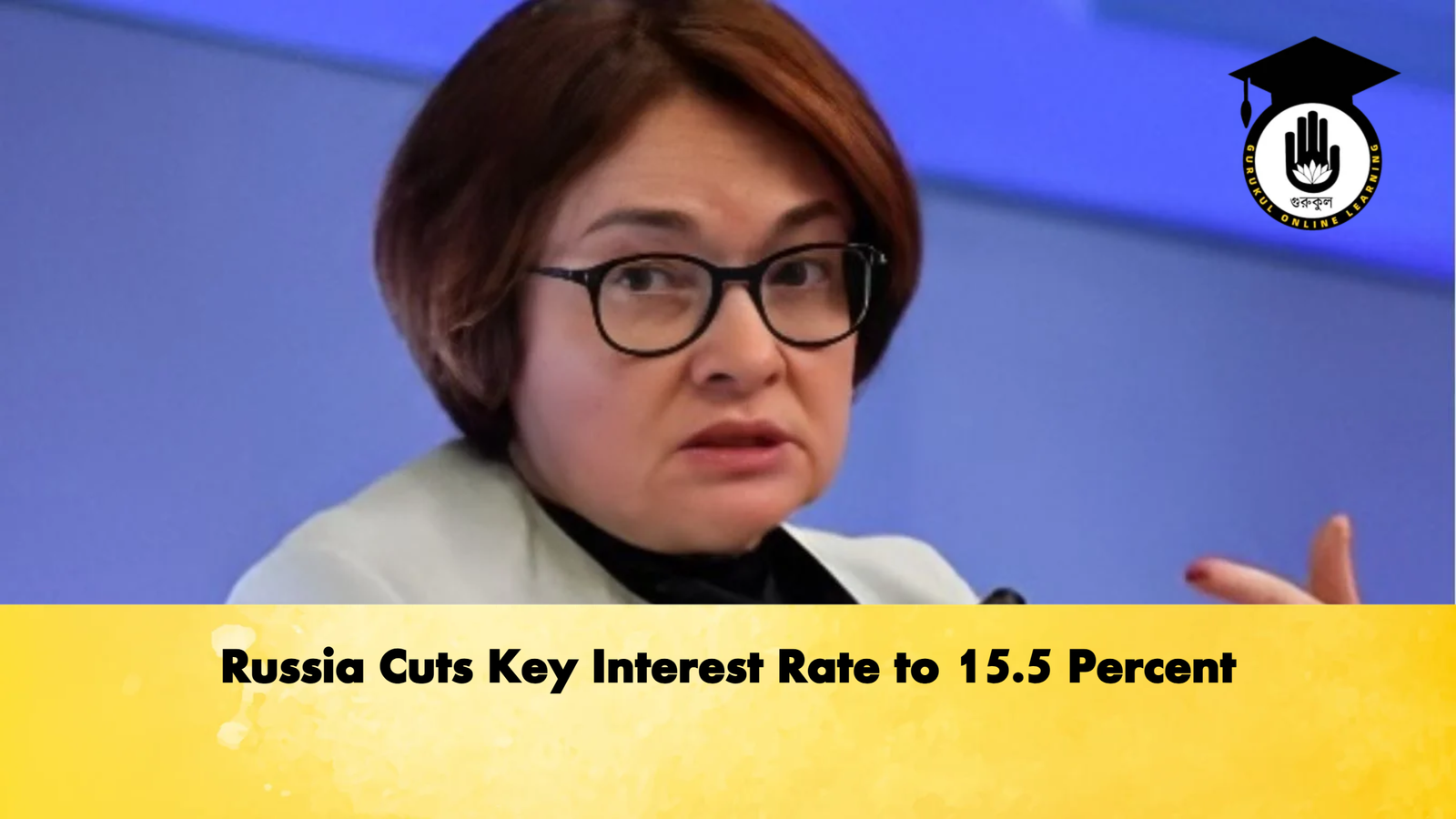
The Central Bank of Russia on Friday announced a reduction of the country’s key interest rate to 15.5 percent, marking the sixth rate cut since the start of 2025. The decision reflects the bank’s ongoing efforts to mitigate the pressures of high borrowing costs and stimulate a slowing economy, even as inflationary pressures remain present but deemed temporary.
In its statement, the bank emphasised that while headline inflation has risen slightly in recent months, the increase is transient and expected to remain under control throughout 2026. The central bank’s strategy aims to balance economic support with long-term price stability.
Analysts have noted that the reduction in the key rate is likely to encourage business investment and ease credit conditions, providing a welcome boost to corporate borrowing and industrial expansion. However, Russia’s economy continues to face challenges, including global market uncertainties, declining revenues from oil and gas exports, and persistent domestic investment constraints.
Key Interest Rate Changes
| Date | Interest Rate (%) | Notes |
|---|---|---|
| January 2025 | 17.5 | Initial reduction amid economic pressures |
| March 2025 | 17.0 | Step to ease business investment |
| May 2025 | 16.5 | Temporary inflation spike observed |
| July 2025 | 16.0 | Planned rate reduction announced |
| September 2025 | 16.0 | Rate stabilised |
| November 2025 | 16.0 | Monetary policy reassessment |
| January 2026 | 15.5 | Latest cut, sixth reduction since 2025 |
A recent Bloomberg survey revealed that only 2 of 8 economists had predicted the latest rate cut, with the remainder expecting rates to remain unchanged.
The Central Bank has indicated that the lower rate will support retail spending and industrial output, offering relief after last year’s high rates hampered both corporate initiatives and consumer borrowing. Analysts caution, however, that while the monetary policy remains flexible, the central bank must navigate a slow-growth environment alongside global economic uncertainties.
Internationally, Russia’s interest rate adjustment may influence foreign investment and credit markets, particularly in sectors linked to production and exports. By lowering the key rate, the central bank seeks to stimulate business activity, increase household expenditure, and keep short-term inflation under control, signalling a cautious but proactive approach to sustaining economic health.
Overall, the rate cut represents a deliberate strategy to support economic recovery, while maintaining vigilance over inflationary trends and global market volatility.