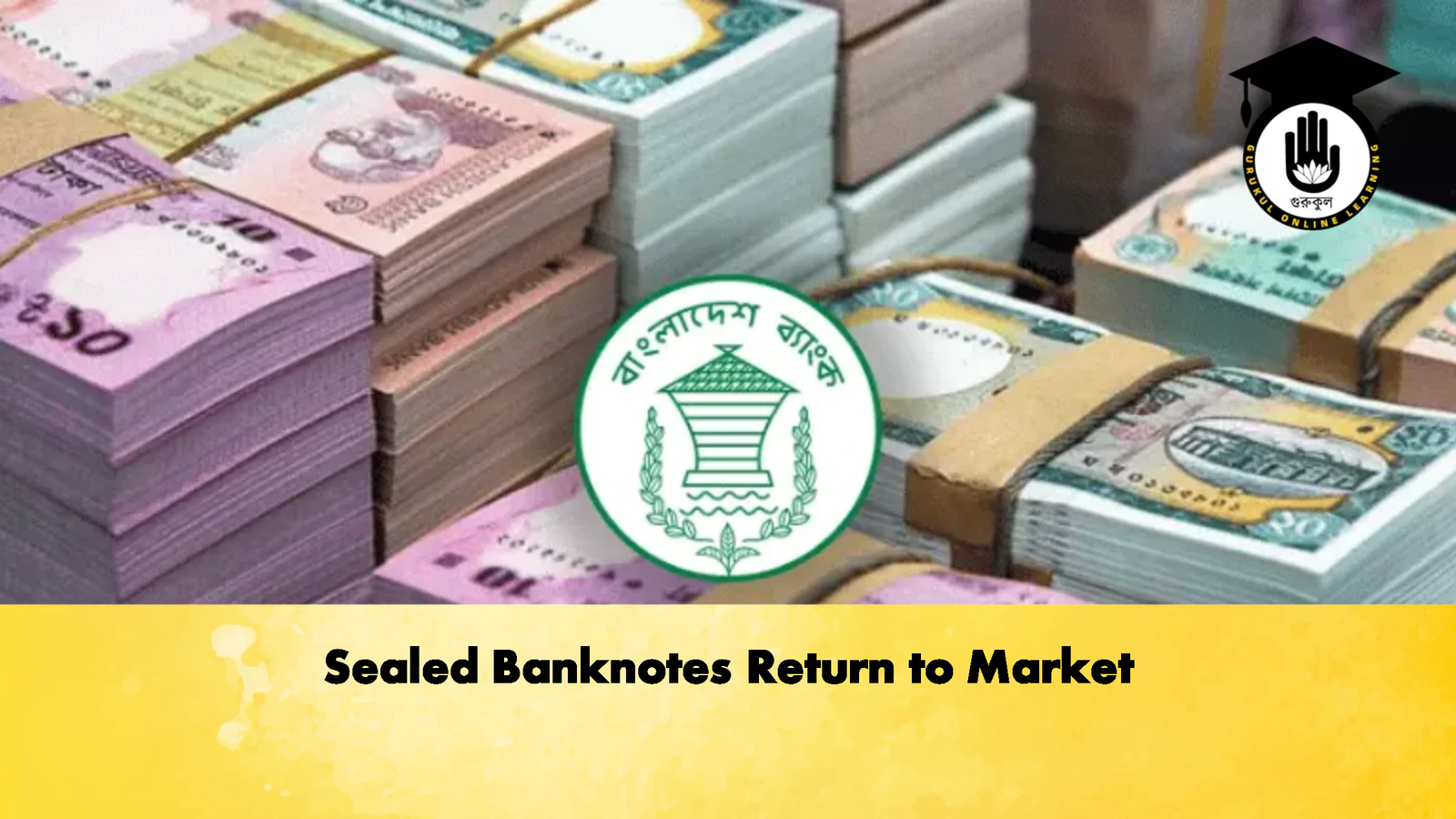
Previously sealed banknotes bearing the portrait of Sheikh Mujibur Rahman have begun re-entering circulation in Bangladesh, reflecting a pragmatic adjustment in monetary operations under the country’s interim administration headed by Muhammad Yunus.
The development follows several months during which older currency designs were progressively withdrawn from active use and replaced with newly issued banknotes as part of a broader redesign initiative. While the initial approach was shaped by administrative reform priorities and sensitivities surrounding national symbolism on currency, operational realities within the cash distribution system have now prompted a partial reversal.
At the centre of the shift is a persistent imbalance between demand for physical cash and the supply of newly printed notes. Officials at Bangladesh Bank have confirmed that the banknotes now returning to circulation were never formally invalidated or demonetised. Their reissue is therefore fully compliant with existing regulations and is being carried out through standard banking channels in a controlled and phased manner.
Central bank representatives have stressed that the decision is driven primarily by liquidity management needs rather than any reassessment of earlier design choices. Bangladesh’s economy remains heavily reliant on cash transactions, particularly in rural and semi-urban areas, placing sustained pressure on available currency stocks. This pressure has been intensified by delays in the production and distribution of newly designed denominations.
According to spokesperson Arif Hossain Khan, the authorities have been overseeing the printing of approximately nine separate denominations of redesigned banknotes. However, production and logistical capacity have not fully aligned with ongoing market demand. The resulting shortfall has been most visible during peak cash cycles, when withdrawal activity typically increases across the banking system.
To address this gap, previously printed but unused stocks of older-design notes are being gradually released into circulation. Banking officials confirm that commercial lenders are implementing these instructions in accordance with central bank directives, ensuring continuity of cash availability without disruption to everyday transactions.
Further operational detail was provided by senior banking officials, including Shafiqul Islam, General Manager at Sonali Bank. He noted that distribution of the older series had been temporarily suspended around the Eid al-Adha period in 2025, during which time significant volumes of notes were recalled and securely stored. These reserves have now been reactivated following updated instructions from the central bank.
Currency Circulation Overview
| Category | Details |
|---|---|
| Currency Type | Banknotes featuring Sheikh Mujibur Rahman |
| Current Status | Previously sealed; reintroduced gradually |
| Legal Standing | Not formally banned or demonetised |
| Issuing Authority | Bangladesh Bank |
| Primary Driver | Shortfall in newly printed banknotes |
| New Denominations in Production | Approximately nine |
| Distribution Method | Phased release via commercial banks |
| Key Commercial Bank | Sonali Bank |
| Suspension Period | Around Eid al-Adha 2025 |
| Implementation Approach | Controlled re-circulation of stored stock |
The policy adjustment is taking place against a broader backdrop of political transition and institutional change following mass demonstrations in July, which led to significant shifts in governance structures. During that period, public debate intensified around national symbols, including statues and commemorative representations linked to the previous administration. Reports indicated that some monuments associated with Sheikh Mujibur Rahman were damaged amid unrest in several locations, underscoring the politically sensitive environment surrounding symbolic state imagery.
Currency design, as one of the most visible expressions of national identity, became part of this wider reconsideration. The interim authorities initially moved towards introducing redesigned banknotes, signalling a departure from earlier visual formats. However, economists and financial sector analysts have long cautioned that large-scale currency replacement programmes are inherently complex, requiring coordination across design authorities, printing facilities, commercial banks and nationwide distribution networks.
Such programmes also carry considerable fiscal and logistical implications. Rapid withdrawal and replacement of circulating cash can generate substantial production costs while also risking temporary liquidity shortages if new notes fail to reach circulation at sufficient speed. These structural constraints are widely understood to have contributed to the current reliance on previously printed reserves as a stabilising mechanism.
Despite official indications that new notes would not be released during the forthcoming festive cycle, informal market activity suggests continued trading of older-design banknotes, in some cases at premium rates. This indicates sustained public demand for liquid cash and points to uneven distribution of newly issued currency across different regions.
At the same time, questions have emerged regarding the pace and efficiency of printing operations for the redesigned series. While authorities have not attributed delays to any specific factor, the emphasis remains on ensuring adequate liquidity within the financial system and maintaining smooth transactional flows.
Ultimately, the return of previously sealed banknotes highlights the delicate balance between policy intentions and operational necessity. For now, monetary authorities appear focused on stabilising cash availability, using all available instruments to ensure continuity, confidence, and accessibility within the country’s currency framework.