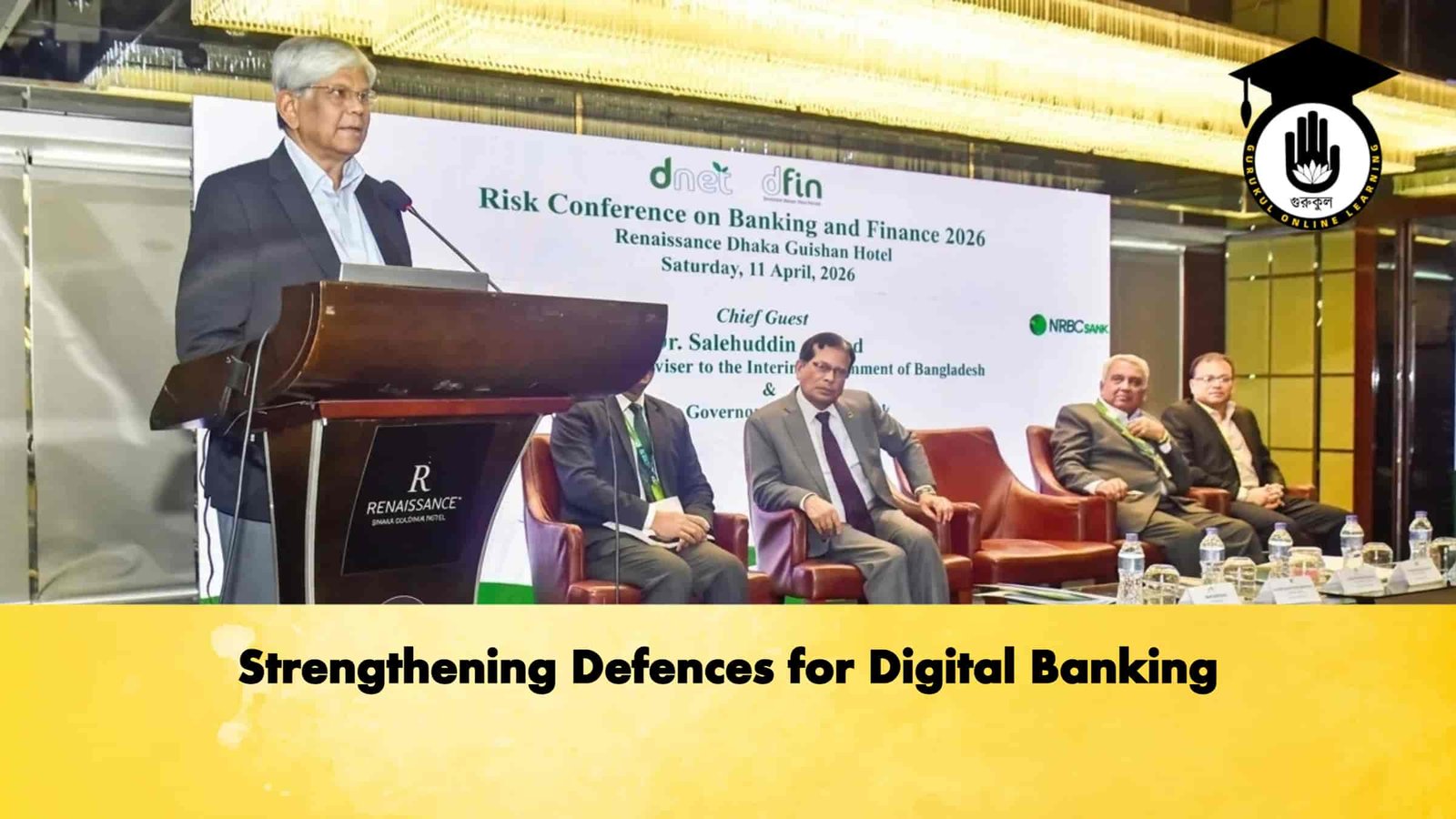
Bangladesh must enhance its regulatory preparedness before issuing licences for digital banks, as the model carries inherent risks such as fraud and cyber theft, experts observed at a conference in Dhaka on Saturday. The warning came amid renewed discussions on modernising the country’s financial sector through technology-driven banking solutions.
Digital banks, which operate primarily through paperless platforms with minimal physical presence, offer services including deposits, withdrawals, and fund transfers. While they promise efficiency and financial inclusion, speakers cautioned that robust cybersecurity frameworks, regulatory oversight, and risk management mechanisms are essential to safeguard customers and maintain financial stability.
The observations were made at the day-long “Risk Conference on Banking and Finance 2026,” organised by dFin and Dnet in collaboration with City Bank and NRBC Bank. The event was attended by policymakers, economists, bankers, and industry stakeholders.
The central bank, Bangladesh Bank, has twice attempted to issue licences for digital banks in recent years; however, both initiatives stalled due to regulatory and structural challenges.
Key Speakers at the Conference
| Name | Designation | Affiliation |
|---|---|---|
| Dr Salehuddin Ahmed | Former Finance Adviser and Former Governor | Bangladesh Bank |
| Dr Mustafizur Rahman | Distinguished Fellow | Centre for Policy Dialogue |
| Dr Toufic Ahmed Choudhury | Former Director General | Bangladesh Institute of Bank Management |
| Mashrur Arefin | Chairman | Association of Bankers, Bangladesh |
| Dr Shah Md Ahsan Habib | Professor | Bangladesh Institute of Bank Management |
Addressing the inaugural session as chief guest, Dr Salehuddin Ahmed highlighted mounting fiscal risks stemming from contingent liabilities of state-owned institutions. He noted that these liabilities have exceeded Tk5.0 trillion, largely comprising government guarantees extended to public entities for procuring goods and services.
“If these guarantees are invoked, it will be very risky for the government, as repayment capacity remains uncertain,” he warned. Economists emphasise that such liabilities, though not reflected in headline fiscal deficit figures, could strain public finances if realised, particularly amid domestic and external economic pressures.
Dr Ahmed also expressed concern over the slow pace of reforms at the National Board of Revenue (NBR), citing limited progress in automation and computerisation. He pointed out that systems such as ASYCUDA have yet to be fully implemented due to inadequate digital infrastructure.
Participants underscored the need for greater transparency in the banking sector, recommending improved accessibility to credit information data so depositors can better understand how their funds are utilised. They also stressed the importance of enhancing financial literacy among bank directors and fostering a risk-aware culture across institutions.
Mashrur Arefin, Chairman of the Association of Bankers, Bangladesh, voiced opposition to a draft provision in the Bank Companies Act proposing that 50 per cent of bank board members be independent directors. He argued that such a structure could create conflicts within boards and complicate decision-making.
Meanwhile, Dr Mustafizur Rahman warned of spillover risks from geopolitical tensions in the Middle East, noting their adverse impact on Bangladesh’s export-oriented sectors, particularly ready-made garments, with potential knock-on effects for the banking system.
The conference concluded with remarks from Dr Shah Md Ahsan Habib, who emphasised the need for resilience, transparency, and technological readiness to navigate emerging risks in Bangladesh’s evolving financial landscape.