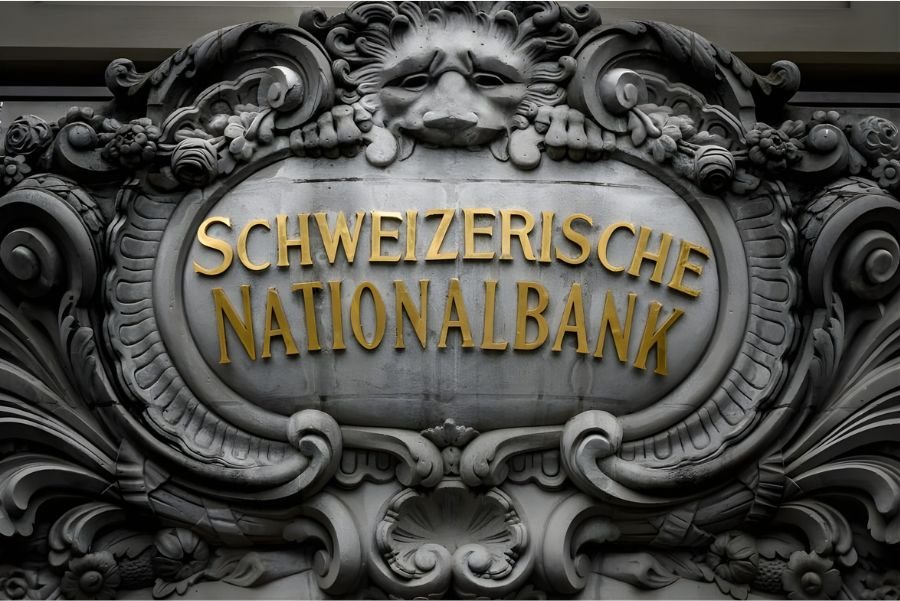
Switzerland’s central bank, the Swiss National Bank (SNB), has reported a profit of 12.6 billion Swiss francs ($15.7 billion) for the first nine months of 2025, largely driven by soaring gold prices and rising stock markets.
While the SNB’s gold holdings remained unchanged, their value surged as investors flocked to the precious metal, spurred by economic and geopolitical uncertainties. At the end of September, the price of a kilogram of gold stood at 98,024 Swiss francs, compared to 76,011 francs at the end of December 2024. This represented a valuation gain of 22.9 billion francs for the SNB’s gold reserves, the bank said in a statement.
The SNB also recorded 23.1 billion Swiss francs in price gains from its equity securities and instruments, helping to offset exchange rate-related losses amounting to 46.3 billion francs.
Like gold, the Swiss franc is regarded as a safe-haven asset, and the currency has appreciated significantly since the start of the year, particularly against the US dollar.
In comparison, the SNB’s profits for the first nine months of 2024 reached 62.5 billion Swiss francs, which later rose to 80.7 billion francs by the year’s end.
However, Arturo Bris, a professor of finance at the International Institute for Management Development in Lausanne, has raised concerns about the potential for an artificial intelligence (AI) technology bubble.
Using data from the US Securities and Exchange Commission, Bris highlighted that six major tech stocks—Nvidia, Microsoft, Apple, Amazon, Alphabet, and Meta—account for more than $48 billion in the SNB’s portfolio.
The SNB’s equity portfolio follows a passive strategy, reflecting stock market indices rather than actively selecting stocks to generate profits. According to Bris, these six stocks alone are responsible for much of the recent surge in the US stock market.
While Bris stressed that it is impossible to declare a bubble before it bursts, he warned of a significant over-valuation of these stocks. Should the AI sector experience a crash, the risks for the SNB could be substantial.