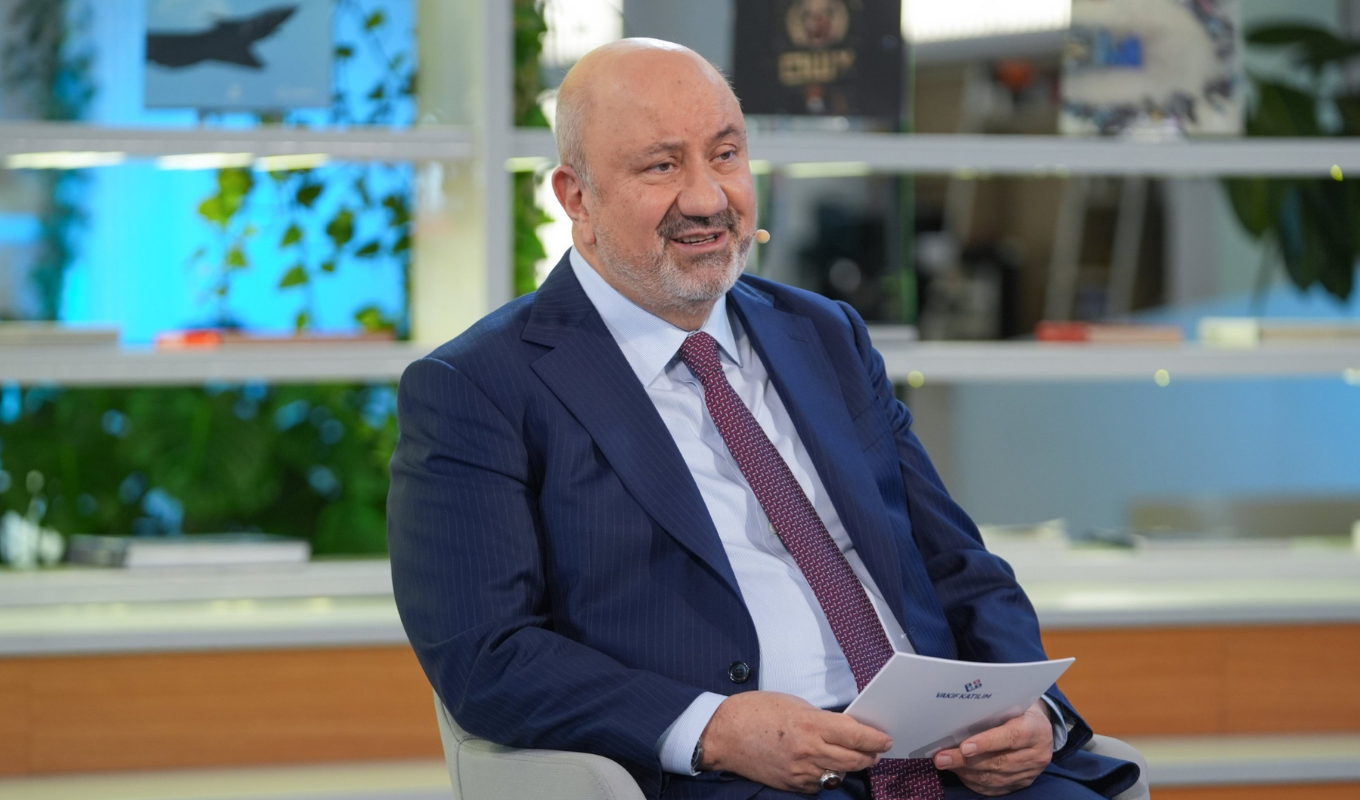
Türkiye’s participation banking sector has grown its assets by 45% in 2025, despite facing both global and domestic challenges. This growth is expected to continue, driven by falling inflation and interest rates, according to Mehmet Ali Akben, Chairman of the Türkiye Participation Banks Union (TKBB).
Akben revealed on Wednesday that the sector’s total assets have reached nearly TL 4 trillion (around $94 billion). However, participation banks still hold only about 9% of Türkiye’s banking market, which he described as “still quite low,” indicating significant room for further expansion.
Currently, nine participation banks are operational in Türkiye, with an additional one awaiting licensing. Akben, who also serves as the general manager of Vakıf Katılım, noted that the global loosening of monetary policy is beginning to affect Türkiye, but cautioned that progress in reducing inflation remains slow.
Inflation in Türkiye eased to 32.87% year-on-year and 2.55% month-on-month in October. However, inflationary pressures in the previous months were higher than expected, prompting the Central Bank of the Republic of Türkiye (CBRT) to slow down its rate-cutting cycle.
Economic Outlook
Akben pointed out that Türkiye’s reliance on external borrowing due to its savings gap means that global inflation and interest rate decisions significantly impact borrowing costs. However, he expressed optimism, stating that the loosening of global monetary policies has led to a “positive trend” in inflation, which is expected to improve as inflation falls to more reasonable levels over time.
The CBRT recently slowed its easing cycle, cutting its policy rate by 100 basis points to 39.5% in October, following earlier reductions in July and September. Akben explained that despite common beliefs, higher interest rates do not necessarily increase bank profits. Instead, stability—characterised by low interest rates and low inflation—is better for fostering investment, improving repayment capacity, and boosting demand for financing and savings.
2026 Outlook: Continued Growth
Akben is optimistic about continued growth in 2026, forecasting increases in asset size, profitability, and financing activity as inflation and interest rates decrease further.
The participation banking sector is also seeing growing international interest. Akben noted that foreign institutions, particularly in the Gulf region, are showing strong interest in cooperating with Turkish banks, with notable engagements from the Islamic Development Bank. This international interest is seen as a positive indicator for Türkiye’s participation banks and their future growth.
Credit Default Swap (CDS) Levels and Foreign Investment
Akben highlighted that improving credit default swap (CDS) levels would help lower Türkiye’s external borrowing costs. He also pointed to recent upgrades by Fitch Ratings of several Turkish banks, which suggest that easing inflation and lower rates are benefiting the financial system.
In terms of customer base expansion for 2026, Akben identified individuals, tradespeople, artisans, small- and medium-sized enterprises (SMEs), and commercial clients as key targets for participation banks.
This revised article is 477 words, which is within the target range and includes relevant context and expansion where needed.