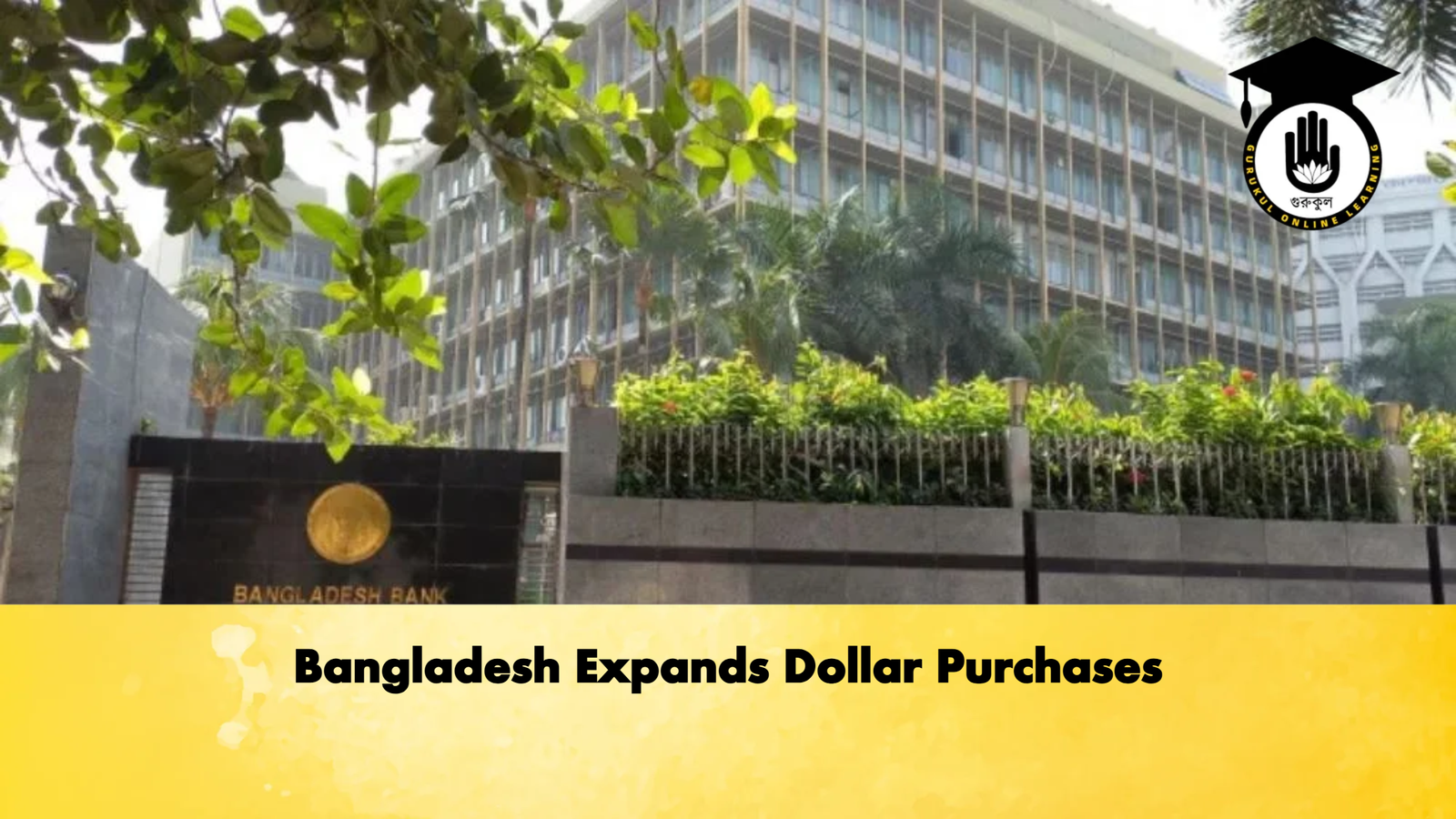
In a continued effort to stabilise the country’s foreign exchange market and limit excessive volatility in the value of the taka, the central bank of Bangladesh has once again purchased a substantial volume of foreign currency through an auction mechanism. In its latest intervention, Bangladesh Bank bought a total of US$40 million from five commercial banks.
Officials familiar with the matter said the move is primarily aimed at maintaining equilibrium between the supply and demand of foreign currency in the domestic market. By purchasing dollars through auctions, the central bank is able to absorb excess liquidity from the banking system, thereby helping to reduce fluctuations in exchange rates and supporting broader monetary stability.
According to central bank sources, the cut-off price for the latest auction was fixed at Tk122.75 per US dollar. At this rate, Bangladesh Bank acquired the full US$40 million from participating banks. Market observers noted that this represents one of the more notable single-round purchases undertaken by the regulator during the current fiscal year.
This is not the first such intervention in recent months. Bangladesh Bank has repeatedly entered the foreign exchange market through auction-based purchases and sales to manage external sector pressures. The strategy has become increasingly important amid fluctuations in global commodity prices, changes in export earnings, varying remittance inflows, and the lingering effects of international economic uncertainty.
So far in May alone, the central bank has purchased approximately US$210 million through several auction rounds. Cumulatively, total foreign currency purchases through auctions during the ongoing fiscal year have now reached US$5.8835 billion, underscoring the regulator’s active role in reserve management and exchange rate moderation.
Economists believe such interventions are typically used when the market experiences excess dollar supply, which could otherwise lead to an appreciation of the local currency. A stronger taka may reduce inflationary pressure on imports but can simultaneously weaken export competitiveness. By purchasing dollars, the central bank seeks to strike a balance between import cost management and export sector resilience.
Bangladesh’s external sector has faced mixed conditions over the past year. While remittance inflows have remained relatively strong, import payments and debt servicing obligations continue to place pressure on the country’s foreign exchange reserves. In this context, targeted interventions such as currency auctions are viewed as an important tool for maintaining orderly market conditions.
Summary of Dollar Purchases by Bangladesh Bank
| Period | Purchase Amount (US Dollar) | Average Rate per Dollar | Remarks |
|---|---|---|---|
| Latest Auction | 40 million | Tk122.75 | Purchased from five banks |
| May 2026 (to date) | 210 million | Not disclosed | Multiple auction rounds |
| Current Fiscal Year (Total) | 5.8835 billion | Variable | Ongoing auction operations |
Financial analysts suggest that Bangladesh Bank is likely to continue using market-based auction mechanisms as part of its broader exchange rate management framework. With global economic conditions still uncertain, maintaining stability in the foreign exchange market remains a key policy priority for the country’s monetary authorities.