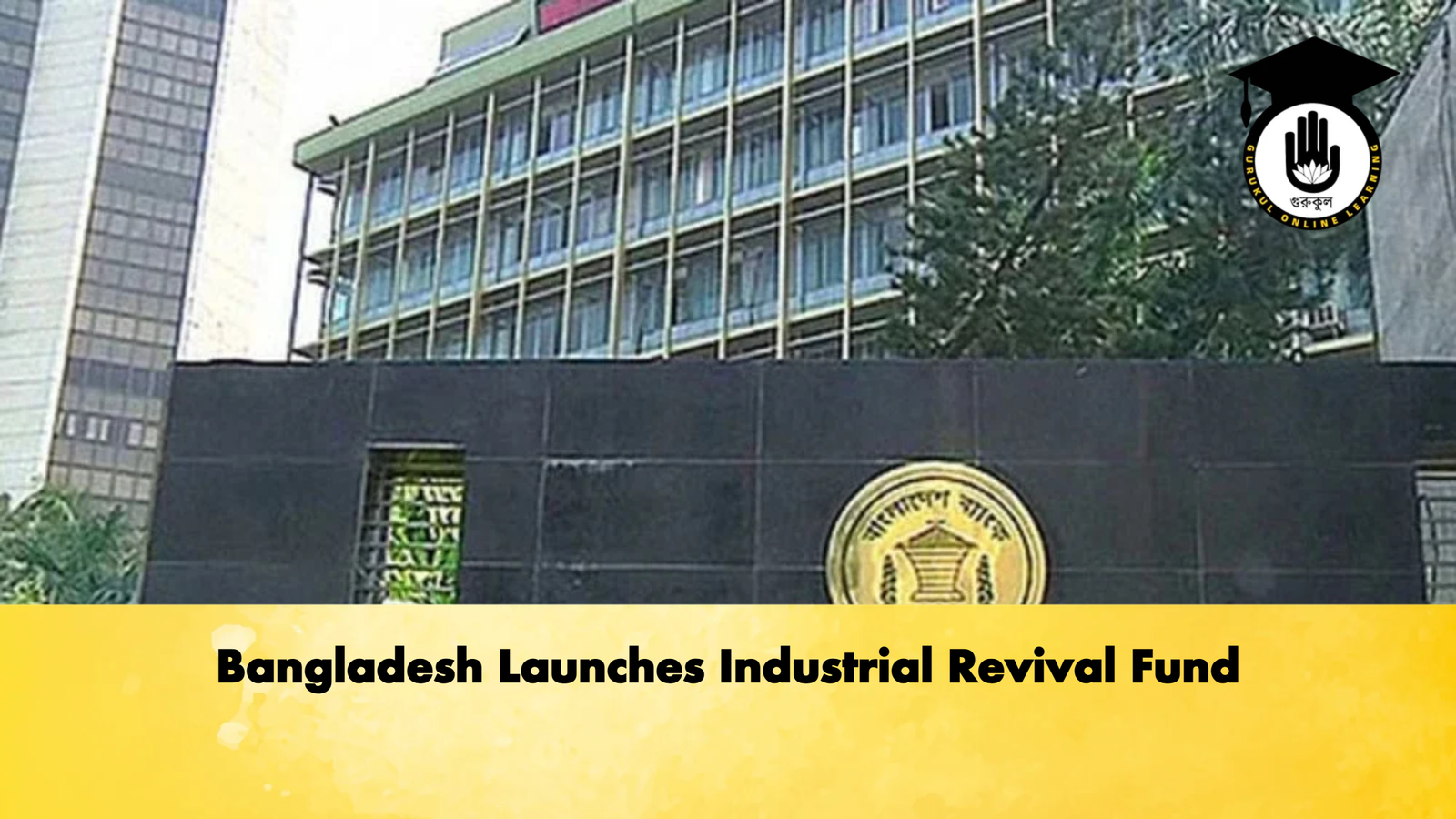
The Bangladesh Bank has unveiled a substantial financial initiative aimed at bringing large-scale industrial and service-sector enterprises back into operation after periods of closure or partial shutdown. Under this programme, a special fund of Tk 2,000 billion (20,000 crore) has been established to revitalise dormant productive capacity and inject renewed momentum into the national economy.
According to the central bank’s latest directive, scheduled banks will be able to access funds from this facility and on-lend to eligible borrowers at a maximum interest rate of 7 per cent. This represents a significant concession compared with prevailing commercial lending rates, which typically range between 12 and 14 per cent. The lower cost of borrowing is expected to provide meaningful relief to industrial entrepreneurs facing liquidity constraints.
Under the policy framework, an individual industrial entity or corporate group may obtain working capital loans of up to Tk 20 billion (200 crore). Priority will be given to enterprises that possess adequate infrastructure and machinery but are unable to maintain full-scale production due to shortages of operating capital. The initiative is also designed to support export-oriented and indirect export-linked industries, which are considered vital to foreign exchange earnings.
The programme forms part of a broader Tk 6,000 billion stimulus package targeting industrial and service-sector recovery. Beyond restoring production, policymakers expect the scheme to contribute to export expansion, job creation, and the reactivation of long-idle manufacturing facilities.
Notably, the policy also allows financially and technically capable firms to take over or lease closed factories and resume operations, with access to the same financing support. However, strict eligibility criteria have been imposed: beneficiary institutions must have a clean credit history, verified through the Credit Information Bureau, and must not have any record of loan default or financial misconduct.
To ensure transparency and proper utilisation of funds, participating banks may appoint representatives to monitor the use of credit at the enterprise level. In addition, both compliant borrowers and implementing banks may be recognised and formally acknowledged by the authorities for successful execution of the programme.
Economists have broadly welcomed the initiative, noting that it could ease long-standing liquidity pressures in the industrial sector. They also argue that the reduced interest burden may help improve the investment climate and stimulate private sector activity at a time of global economic uncertainty.
Key Features of the Fund
| Item | Details |
|---|---|
| Fund size | Tk 2,000 billion (20,000 crore) |
| Maximum loan limit | Tk 2 billion (200 crore) per entity/group |
| Interest rate | Up to 7% |
| Current commercial lending rate | Approximately 12%–14% |
| Target sectors | Large-scale industry and services |
| Priority recipients | Closed/partially closed factories; export-oriented firms |
| Eligibility conditions | Clean credit history; no record of default or fund misuse |
Overall, the scheme is being viewed as a strategic intervention to restore industrial capacity, strengthen exports, and support employment generation. If implemented effectively, it could mark a significant step towards reviving underperforming segments of the economy and enhancing long-term growth prospects.