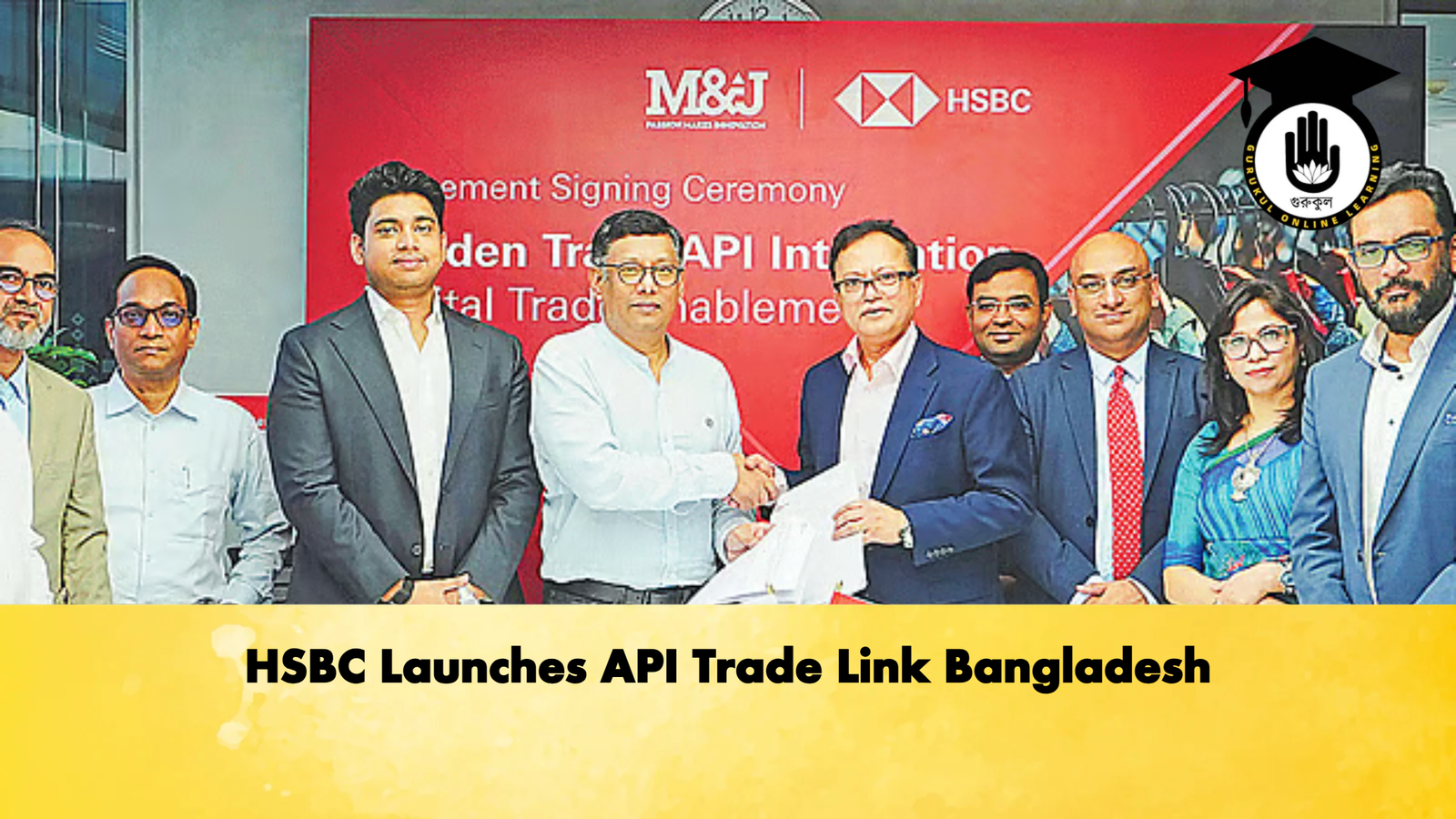
In a landmark move aimed at modernising and accelerating Bangladesh’s international trade infrastructure, HSBC Bangladesh is set to introduce its first-ever Application Programming Interface (API)-based connectivity service. The initiative has been developed in strategic collaboration with M & J Group, one of the country’s leading ready-made garment manufacturers, and is widely seen as a significant step towards the digital transformation of the export sector.
The formal agreement was recently signed at HSBC Bangladesh’s management office in Dhaka, marking the beginning of a new phase in the digitisation of trade finance operations. Industry stakeholders believe the partnership will substantially enhance efficiency, reduce procedural delays, and strengthen the technological backbone of cross-border trade transactions.
Under the arrangement, M & J Group will integrate its internal enterprise resource planning and information systems directly with HSBC’s trade finance platform via API connectivity. This integration will enable seamless, real-time data exchange between the two institutions, eliminating the need for manual documentation and reducing reliance on paper-based processes that have traditionally slowed down trade operations.
Previously, trade finance procedures often required multiple layers of verification, physical document handling, and extended processing times. With the introduction of API-driven automation, these steps are expected to become significantly faster, more accurate, and less resource-intensive.
Key Features of the Initiative
| Aspect | Details |
|---|---|
| Technology | API-based digital connectivity system |
| Partner Institutions | HSBC Bangladesh and M & J Group |
| Core Objective | Faster, automated and accurate trade transactions |
| Primary Benefits | Real-time data exchange, reduced paperwork, improved efficiency |
| Expected Impact | Enhanced transparency, speed, and reliability in trade finance |
According to industry experts, the adoption of such integrated digital systems will improve transparency in import and export financing, reduce operational risks, and enable more informed and timely business decisions. The shift is also expected to strengthen compliance standards and enhance the overall reliability of trade-related financial services.
Speaking on the occasion, the Managing Director of M & J Group, Salahuddin Ahmed, emphasised the company’s commitment to building a technology-driven operational framework. He noted that strengthening global competitiveness remains a key strategic priority, and the new connectivity solution would play a crucial role in achieving that objective.
From HSBC’s perspective, Mohit Agarwal, Head of Global Trade Solutions for South Asia, highlighted that the bank is focused on simplifying and modernising trade finance processes for businesses in Bangladesh. He described the initiative as part of a broader effort to reshape how trade transactions are conducted in an increasingly digital global economy.
Adding further insight, Ahmed Rabiul Hasan, Country Head of Global Trade Solutions at HSBC Bangladesh, stated that the API integration would not only streamline operational processes but also set new benchmarks for efficiency, transparency, and innovation within the country’s trade ecosystem.
Senior officials from both organisations, including M & J Group Director Mahir Dayan Ahmed, were present at the signing ceremony. They collectively expressed optimism that this initiative would serve as a model for other industrial enterprises in Bangladesh, particularly within the export-oriented garment sector.
Analysts suggest that this collaboration could mark a turning point for Bangladesh’s trade finance landscape, paving the way for wider adoption of digital solutions across multiple industries and further integrating the country into global digital trade networks.