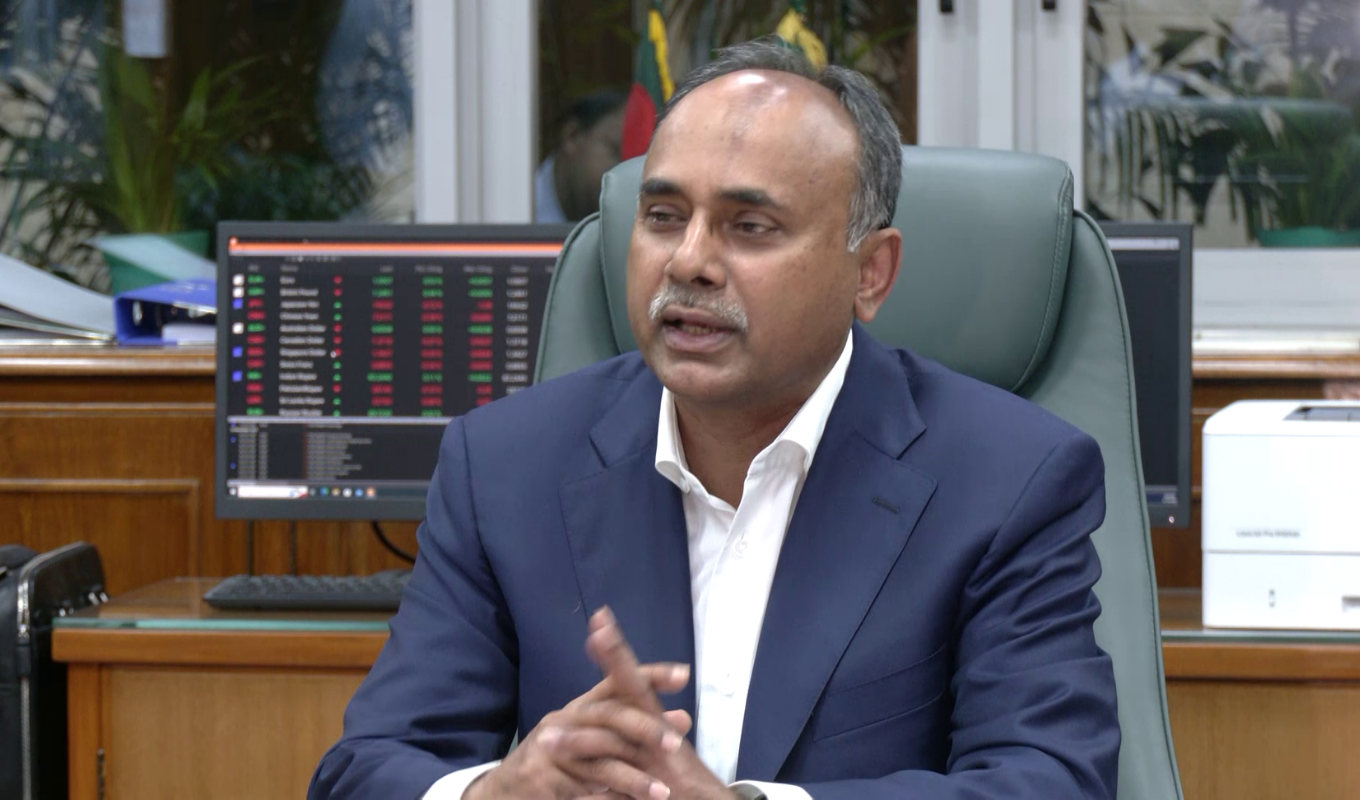
Bangladesh Bank Governor Dr. Ahsan H. Mansur has revealed that approximately BDT 50,000 crore was withdrawn from Islamic Bank through a single family. He stressed the need for robust accounting practices, good governance, and high-quality auditing to ensure the Islamic banking sector’s sustainability and stability in the country.
Speaking as the chief guest at the ‘Bangladesh Islamic Finance Summit 2025’ held in Banani, Dhaka on Sunday, 16th November, the Governor highlighted that the central bank is working on a modern Islamic banking law, incorporating global best practices.
Dr. Mansur stated, “Effective auditing and strong governance are essential for the sustainable growth of the Islamic banking sector. Both Islamic and conventional banks must follow high-quality auditing standards to ensure transparency and accountability.”
Sector Stability Post-Turmoil
The Governor acknowledged that while the Islamic banking sector had faced some instability in recent times, it remains strong overall, with depositor confidence beginning to return. He pointed out that the central bank had already taken several initiatives to restructure and re-organise troubled Islamic banks, showing positive results.
Example of IBBL’s Recovery
Referring to the example of Islamic Bank Bangladesh Limited (IBBL), Dr. Mansur noted that the bank, which once faced severe liquidity issues, has now stabilised and recorded the highest deposit growth in the Islamic banking sector this year.
He further revealed that a significant amount, nearly BDT 50,000 crore, had been withdrawn from IBBL by a single family, which had placed substantial pressure on the bank. Despite this, public trust in the bank remained intact.
Merger Process to Ensure Stability
To ensure the security of liquidity-constrained Islamic banks, the central bank has already initiated a merger process, the Governor explained. “Our primary goal is to protect the interests of depositors. We want to strengthen the balance sheets of Islamic banks, increase paid-up capital, and ensure that qualified and responsible individuals are in the board of directors,” he added.
Optimism for the Future
Looking ahead, Dr. Mansur expressed optimism that with well-planned and well-governed development, Bangladesh’s Islamic banking sector would continue to grow stronger. “We aim for Islamic banking to advance sustainably and contribute even more significantly to the country’s economy,” he concluded.